A dog harness can make everyday walks feel more organized, but the words no pull do not mean a harness will automatically change every walking habit. The best choice is one that fits your dog correctly, gives you a useful attachment point, and works alongside calm, consistent leash handling.
Start with accurate measurements
Measure before ordering, even if you already know your dog’s usual size. Brands use different size ranges, and two dogs of the same breed can have very different proportions.
- Chest girth: Measure around the widest part of the rib cage, usually just behind the front legs.
- Lower neck: Measure where the harness will sit, not high under the jaw like some collars.
- Weight: Use weight only as a secondary guide when the product chart includes it.
Keep the tape level and close to the coat without pulling it tight. If your dog falls between sizes, follow the specific product guide and check the available adjustment range.
Compare front-clip and back-clip designs
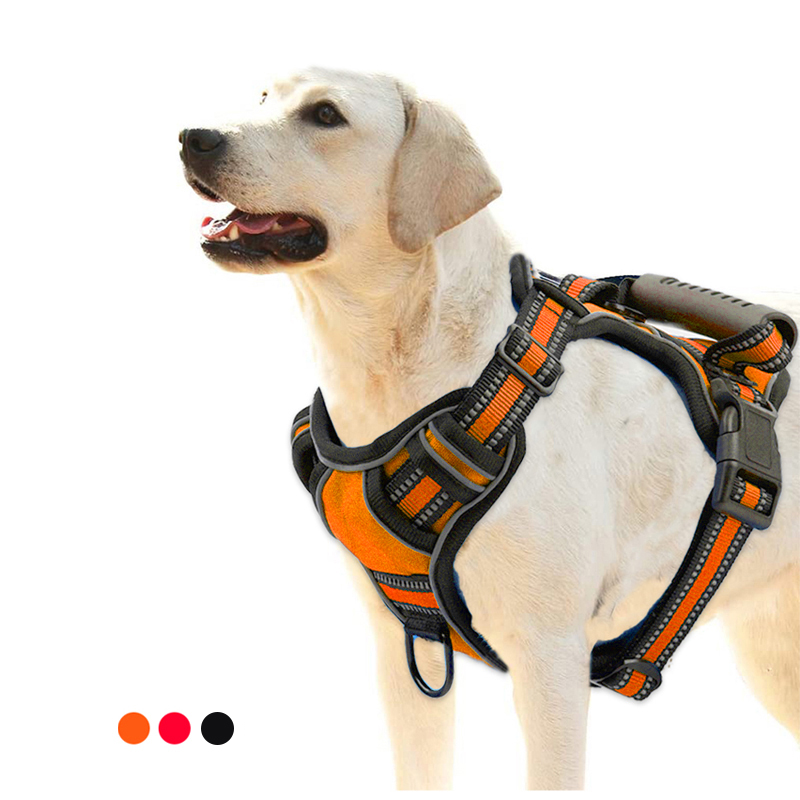
A back attachment can feel simple for relaxed daily walking. A front attachment may help redirect forward movement when a dog pulls, while a dual-clip harness gives you more options. The best setup depends on your dog’s behavior, body shape, and the walking skills you are practicing.
Hardware should sit flat and move freely. Look for secure buckles, reinforced leash points, and straps that can be adjusted without creating bulky pressure spots.
Check the fit in motion
A harness should be snug enough that your dog cannot back out, but it should not pinch or restrict the shoulders. As a general check, you should be able to slide one or two fingers under a strap, depending on the product instructions and your dog’s coat.
Watch your dog walk, sit, and turn. Stop and readjust if you notice rubbing, shortened steps, twisting, or a strap moving toward the throat. Recheck fit after several minutes because webbing can settle into the coat.
Introduce the harness gradually
Let your dog see and sniff the harness first. Pair brief handling with calm praise or a small reward, then build up from wearing it indoors to short outdoor walks. Avoid forcing the harness over a worried dog; slower introduction often creates a better routine.
Inspect before every walk
Look at buckles, stitching, webbing, and metal rings. Replace gear that is frayed, cracked, bent, heavily chewed, or no longer holds adjustment. Reflective details can support visibility in low light, but they do not replace a light, attentive handling, or safe route choices.
Browse dog harnesses and leashes at Nuzzelo, and always follow the measurements and instructions on the individual product page.